
27+ Simple Ways To Build a Family Travel Fund
Packed for Life contains affiliate links. If you make a purchase using one of these links, we may receive compensation at no extra cost to you. As an Amazon Associate, I earn from qualifying purchases. See my Disclosure policy for more info.

Family vacations don’t have to feel impossible. These 27+ simple ways to build a family travel fund show how small changes can add up fast.
We love to travel and are always looking for creative ways to share the world with our kids more too. After 40+ years, 23 countries and 5 continents, we have a lot of experience and tips to share.
We’ve found that it’s much easier when you start with a goal, then add in a plan, and a commitment to making the vacation a priority.
So here are some ways you can start today. Plus some valuable tips on how to set up your travel fund, ways to save & earn more money, & prioritize your goals. So let’s get the dreaming, planning and doing started.

How to Save Money For Travelling
Here are 5 simple steps to setting up your family vacation fund:
- Create an overall family budget
- Set up a travel fund & open a travel fund bank account
- Create & prioritize your family travel goal
- Save more money by reducing family expenses
- Make extra money for your travel fund account
As a family who values experienced over things we’ve found creating a family travel fund and travel budget has been the number one thing that’s helped us make travel happen more often.
It has been a good opportunity to look at our lives and find ways to manage our finances in different ways. It’s also what allowed us to spend 6 months in South East Asia.
I acknowledge that for some people who are in a more challenging position financially, this may be difficult to almost impossible.
I want to say that for most families, it is possible. I’ve travelled when making less than $12,000/year, and our family has travelled while living on one salary and making an average Canadian income of around $50,000 / year.
⭐️ Check out this FREE workshop Cash Crunch: How to Make Money and Save Money when times are tough. It’s a fun 1+ hour pre-recorded training + free resources. I found it super helpful, and full of great ideas.
While these tips are quite simple, putting them in action may not always be easy. Yet, if you and your family want to travel more, it is possible, with a little prioritization, creativity and commitment to making changes that will help you live out your dreams.
Ways To Save More Money for Travel

1. Build A Budget
The number one mistake people / families make when trying to travel more, is not having a budget.
A budget is where it all begins.
For everything!
You want to pay off debt so you can move to your dream house and vacation every winter in Florida or the Bahamas… you need a budget.
You want to send your kidlets to a better college / university….you need a budget.
You want to quit the job you hate and travel the world for a year….. you need a budget.
If your family has been on the fence about really looking at your income coming in, and your expenses going out, now is the time to start. In order to build a family travel fund you will need to first create an overall budget.
Unless you have been practicing good money management for a long time, you’re likely like me and in need of a good reminder or two, to look at and address those less than ideal financial habits. Remember I said it’s simple, but may not always be easy.
You also need the right mind set.
Having a budget is an amazing long term strategy that will actually help you reach your goals. There’s no immediate short term gain or endorphin rush you get from impulsive spending. It’s like the tortoise, slow and steady wins the race, or in this case earns an awesome family trip.
If you want to save more money for travelling, you’ll need an overall family budget.
Track All Income and Expenses
Start by tracking ALL of your family income and expenses.
Make a list. Be sure to include all those “little” charges like coffees, apps, subscriptions, treats, as well as costlier items like gifts, gym memberships, utilities, mortage etc. ALL OF IT! Be brutally honest with yourself and your partner if you have one.
The very first time I did this it was eye opening experience. I had no idea where all my money was going, or why I was living pay cheque to pay cheque when I wasn’t making any big purchases.
Assign either bi-weekly or monthly amounts to each budget category and track your progress every paycheque.
- Once you know how much money you need to pay your monthly bills, you’ll know how much is left over for travel and other goals.
There are a few options for tracking your budget:
- We currently use a spreadsheet. You can also use a popular zero budgeting program like You Need a Budget (YNAB) or an app like MINT.
We won’t be able to go into detail on how to budget here, as it requires a more comprehensive explanation. However, there are lots of how to’s out there, or sign up for a free course like the Busy Budgeter’s 90 Day Budget Bootcamp if you need extra help and support.

2. Set Up A Travel Budget & Open A Travel Account

Inside your overall family budget set up a budget category for travel, and decide on a reasonable bi-weekly or monthly amount you’d like to contribute. This amount may change over time as your circumstances change.
- I also recommend having a different bank account or place for your travel fund. One that’s less easy to dip into on a regular basis, that isn’t linked to your debit card. Some different options include investments, or a high interest savings account.
- Set up a reoccuring transfer so that each paycheque, your vacation money is transferred right away into your travel fund account (or a day later to avoid overdraft fees). If you can’t see it, it’s like it doesn’t exist right?
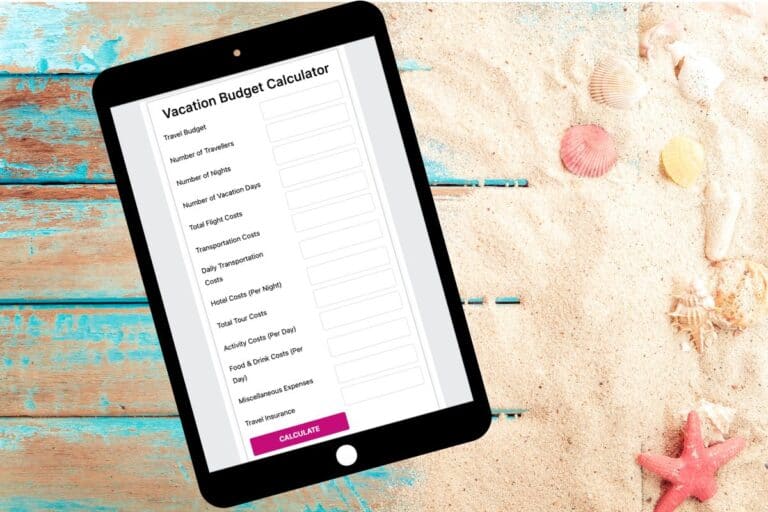
- Use our FREE online travel budget tool to get a good estimate as to how much money you’ll need for your trip.
- Be sure to include a travel emergencies bucket, so you’ll always have enough for unexpected extras. Get more great tips for being prepared for anything in my Family Travel Emergency Plan post.
But in order to know how much you need to put away and save for your trip you need to create some goals!
⭐️ Check out this FREE workshop Cash Crunch: How to Make Money and Save Money when times are tough. It’s a fun 1+ hour pre-recorded training + free resources. I found it super helpful, and full of great ideas.
3. Create and Prioritize Your Family Travel Goals

How will you know how much to save for your next family vacation, if you don’t have a goal in mind?
It’s also important to make sure everyone is on board with your goals and how you will get there. Get your kids and partner excited about travel and easy ways to grow your travel fund.
There are a couple of different approaches you can take:
- Choose your travel budget first: Take a look at your overall budget and see how much you can realistically save in the time frame you want to travel by. Then choose a destination that fits your budget.
- Choose your destination first: Once you have decided on your destination, figure out how much it will cost for flights, accommodations, excursions, food etc., then divide it by the monthly amount your family can realistically save, to get your estimated months until travel.
We almost always choose our destination based on budget, rather than choosing the destination first. Our 2 week trip we took to Cuba instead of our original idea of Hawaii is a prime example.
A few years ago we decided to head somewhere warm in the winter to escape the -30°C northern Canadian cold. Hawaii was out first choice, but with only 6 months to save, it was wayyy out of our price range. After much research, we ended up spending an amazing vacation in Cuba for less than half the price a week in Hawaii would have cost.
Planning ahead, flexibility and creating a travel goal & budget will also help prevent your family not go into debt on your next trip.
Prioritizing Family Travel
One caution, if you are planning on making some pretty big changes to prioritize saving for travel, make sure all family members are on board.
If one partner still wants to spend like crazy and the other wants to penny pinch, or if you haven’t looped your kids in as to why you are having a frugal Christmas, or buying fewer expensive “toys”, it can make reaching your goals harder.
- Get your kids and partner involved in the decision making.
- Invite them to give their input into destination, ways to save or earn extra money.
- Buy your kids a travel piggy bank or open a bank account for them, and encourage them to save their allowance, or offer ways to earn extra vacation money.
PRO TIP: Cutting your family’s expenses or bringing in more money are the two ways you will be able to agressively save for more trips. Ideally do both. I will give you some ideas for both coming up.
Reduce Family Expenses
Now that you you have an idea of where you money is coming in and going out, see if there are ways you can cut back on every day expenses.
4. Reduce Unnecessary Spending

First step is to reduce unecessary spending. With the list of expenses you made for your budget above, consider what your family actually “Needs,” versus which of these items are actually “Wants.”
- Take a piece of paper (or google sheets / excel spreadsheet) and put two headings on it “Wants” and “Needs.” List all your expenses under the appropriate category.
PRO TIP: I like to check my Visa statement as I use a credit card for all my purchases (and it’s very enlightening as to what I spend my money on). I recommend you do the same, to get a more wholistic view of your spending situation.
Things you could live without are likely wants. Things that cover basic necessities like food, clothing, shelter, reasonable transportation costs, supplies for school or work are likely needs.
- Beside each “Want” write down the average amount you spend on these items each month. If you aren’t sure, look over last years spending on your credit cards and bank accounts.
- If it’s a yearly purchase or cost, divide by 12, to get your monthly amount. That is how much your family could potentially save monthly. You might be surprised at how easily these expenses add up.
Next decide which unnecessary spending items you could live without. This will be different for everyone. Some families may be comfortable making drastic changes, others may prefer a more moderate approach. Do what works best for you.
With each “need” consider if it’s something you really need now, or can you wait? It can sometimes be handy to categorize things by time frames, example need immmediately, mid-term (6 to 12 months), or long-term (12+ months).
Here are some ideas to decrease spending (we’ll get into more later):
- Reduce Christmas and gift spending. Start making homemade gifts or offering your services such as cooking a meal, cleaning their house, watching their kids so they can go on a date night etc. Hold small Birthday parties at home, and cut back on extravagant parties and gift giving.
- Use cash back apps to get money back on every day purchases you already make. Just be careful not to actually increase your spending.
- Get your hair cut less frequently. Stretch out the time in between haircuts, or choose a hairstyle that needs less frequent haircuts.
- Do spa days & nails at home instead of paying for a salon trip.
- Reduce the temptation to impulse spend: Turn off email notifications from online retailers. Visit the mall / grocery store / your favorite online retailers less often. Introduce a 72 hour wait period (or longer) before purchasing anything above your basic budgeted family needs.
- Do free activities with the kids: Go on local walks and hikes, visit museums on free days, take books out of the library, swap puzzles on local FB groups, swim at the local beach / lake etc.
Focus on what you can do with that money instead
If you are finding it hard to give up any of the extras you are used to, imagine what you will do on holiday with that money instead.
- Fancy umbrella drinks on the beach.
- Sipping an espresso in Italy.
- Three awesome days at Disneyworld with your kids.
- A road trip to some awesome National Parks like Zion, Bryce and Grand Canyon.
- A beach vacation in Phu Quoc Vietnam or Mexico.
Find the thing that will motivate you, your partner and kids. Put a picture, or a travel collage / vision board up where you can see it every day as a reminder.
These are just a few ideas to get you started. There are more tips on how to save for your travel fund later on in this post.
PRO TIP: Sign Up for Travel Deal Newsletters: Nobody wants to clutter their inbox, but signing up strategically for mailing lists for travel & airline companies can give you an edge when looking for deals.
⭐️ My favorite newsletter & App let’s you save up to 90% on flights out of US airports, by booking directly with the airlines. Cheaper vacation costs = more vacations or longer trips.
5. Stop Unnecessary Monthly Charges

Stopping unnecesary or duplicate monthly charges is good one.
It is so easy to rack up $50 or more in reoccuring monthly charges for Apps, subscriptions and for streaming services like:
- Netflix
- Disney+
- Prime
- Crave
- Paramount
- Crunchyroll
- YouTube premium
- Kindle Unlimited
- Apple Magazine
- Physical Magazines
- Food Subscriptions (example: Hello Fresh)
- That language app you bought for your trip last year, but didn’t cancel and it’s now 7 months later and automatically renewed.
Know how I know? Our family has had all of these, and more.
PRO TIP: Review your family’s subscriptions every month or two, to see if you can get rid of any.
I know it’s hard. If you don’t want to get rid of them for good, could you do it temporarily to meet your vacation goals? Could you share one account, rather than everyone have their own?
What are you willing to give up to have an extra $50 – $100/month go into your travel fund?
👉 You may also like Ways to save money on Family Road Trips
6. Save Money on Exisiting Bills

Here are some tips to help your family save money on your monthly bills:
- Pay off high interest credit cards first. It will be difficult to save if you have large credit card payments each month.
- Pay off your smallest loan. This frees up more money each month by getting rid of that payment you can use to pay other bills. Look into the debt snowball method.
- Schedule your bills to be automatically paid. Having everything set up will avoid late payment fees.
- Use bigger appliances during off peak hours. This will help you save on your electric bill. Check with your electricity for the best hours.
- Minimize your cable package by cutting down on a few movie or sports channels. Better yet, can you cut the cord with your cable company and try streaming services? Streaming services are much more affordable and more on demand. As long as you don’t have multiple accounts of every one of them.
Review Bills & Negotiate lower rates
Bigger companies are often open to negotiating rates, to stop you from switching companies.
Gather up your bills once or twice a year for cellphones, cable, internet, home and auto insurance and give those businesses a call. Figure out what you are asking for ahead of time, and ask to speak to a manager if the customer service agent can’t help you.
Also look into if it is cheaper to pay them all off annually, rather than with a monthly bill.
You can sometimes save hundreds of dollars a year by doing this.
8. Make Your Own Food

Here’s another area where we (yes i am including myself and my family in this), can spend way too much money. Eating out in general can eat into your travel fund faster then you can say peanut butter and jelly.
If you buy lunches or snacks daily at work, and dine out / order take out for your family a time or two a week, that will quickly add up.
With food costs that keep on rising, small changes can have big impacts.
So here are a few tips for making your own food:
- Learn to cook new and interesting family friendly recipes that will save you money, and gain a new skill.
- Bring a bag lunch full of delicious leftovers to work, or have a themed dinner night to up the meal excitement, but not the cost. Have pizza and movie nights at home.
- Add in a vegetarian meal or two a week that focuses on beans or lentils as a more affordable protein.
- Make meals with cheaper cuts of meat.
- Skip the processed food (middle grocery store aisles usually), or ready-made foods, as they’re often more expensive.
- Make from scratch: Grate your own cheese, cut your own fruits and veggies, beat your own eggs, wash the lettuce yourself etc. to save money. Food that’s prepared has a premium cost.
- Make more soups, as they’re filling, affordable and can last a couple of days.
- Batch cook: Make extra portions of meals to freeze for later, to help reduce take out costs for when you need quick, ready made meals.
Now I am not saying to avoid eating out completely (unless you are hardcore into saving money fast. If that is the case then GO TEAM THRIFTY!). Reducing your eating out budget by half or more will have you on your way to funding your next trip.
Make And Bring Coffee From Home

In the same vein, try making your coffee at home more often.
It may not seem like much, but if you are spending $5-$10/day on coffee ( + a muffin, or bagel, cause you have to eat breakfast on the go right?!?), 5 days a week that’s $100-$200/month PER PERSON.
Chances are, you probably buy coffee for home as well, so that’s doubling up on your coffee expense. I am guilty of this myself.
Buy yourself a thermos and take your coffee to go. I really like my travel coffee mug. Or go in on a coffee club at work where everyone takes turns buying supplies.
Or switch to a cheaper drink like tea, or even skipping the caffeine altogether and just drink water.
While it’s usually not a make or break expense, these little things can add up.
9. Meal Plan & Save On Groceries

Food makes up a significant portion of a families budget each month. Finding ways to reduce or minimize your grocery budget will help your family save money faster.
Also I’ve found that meal planning out my week and creating a shopping list helps me avoid picking up those extra, unnecessary items that quickly add up.
Here are a few more tips to help your family save money on groceries:
- Grocery shop only once a week. Frequent trips equal more spending.
- Create a weekly meal plan and stick with it.
- Skip Whole Foods, and buy at discount grocery stores.
- Buy generic store or no name brands.
- Use cash back apps like Fetch Rewards, Ibotta or Rakuten to get money back on grocery & online purchases.
- Buy in bulk strategically: Purchase staples like rice, beans, and frozen goods in larger quantities when the unit price is lower.
- Buy in-season & frozen: Produce is usually cheaper and fresher when in season. Frozen vegetables and fruits are great alternatives.
- Support local CSA’s (Community Supported Agriculture), farmers markets, or use a plot in a local community garden to grow your own veggies.
- Grow your own herbs and vegetables.
- Stock up on the basics (rice, pasta, beans, lentils) that have a long shelf life
- Store food properly to avoid spoilage.
- Buy only what you can realistically use to prevent waste.
- Make a grocery list, and only buy those items
- Don’t shop when you are hungry.
PRO TIP: Try a No Buy Week once every month or two. As a family we try to have one week a month where we clean out the fridge and freezer. It’s a no buy week, and we get creative with meals to use up leftovers and whatever is kicking around in the cupboards. This is a great way to save on some food money, and reduce waste.
10. Save On Housing Costs

Saving on housing costs really depends a lot on your lifestyle and flexibility with living arrangements.
We chose to live in a very small home with reasonable mortgage payments (less than what it would cost us to rent a 3 bedroom apt) for 5 years, and that’s a choice we made so we could prioritize travel, debt repayment and build up our retirement savings. It wasn’t our dream house (or city for that matter), but it worked for our financial goals.
Some ideas to save on housing costs include:
- Down size: Are you living in a lavish house that takes all your “extra” cash to pay the mortgage and provide upkeep? Could your family consider living in a smaller place, a tiny home or renting? Could you move to a cheaper area of town, or a different town / state / country with a lower cost of living all together?
- Rent out a room: Perhaps you have an extra room you could rent out to an international student, a room mate or on AirBnB for some extra cash.
- Trade Skills: Negotiate with your landlord to do repairs for reduced rent.
Another option is to live closer to work, or a good public transportation system, so you could bike, or walk to work. Which leads us into the next money saving tips, on saving on gas and ditching your car.
11. Save on Gas

Gas prices are ridiculous these days! Use cash back apps, and reward programs or gas credit cards for discounts.
Use Gas Buddy to find the cheapest gas near you, then sign up for gas station loyalty programs, which can save you on average $0.05 a gallon. Gas Buddy has a pay saver card where you can save up to an additional $0.30 a gallon when you link your chequing account to the card. They have a lot of other great features to check out.
Upside is another free cash back app where you can earn up to 25¢/gallon cash back on gas. After joining you can also save up to an average of 8% cash back on groceries and dining.
12. Ditch The Car

Cars cost a lot of money. Ditching your vehicle can help your family save on car loan payments, insurance, gas and repair costs.
Or maybe you own two cars. Could you sell one and either carpool, take public transportation or walk or bike everywhere? Bonus you’ll get more exercise, so maybe you can cancel that gym membership you bought but never use, and save even more.
Another option is to explore using a community car share program or co-op for when you do need to use a car.
Understandably this won’t work for everyone, but take a look to see if this option would work for your household.
13. Save On Utilities – Go Green

Making small changes such as switching out your lightbulbs for energy efficient ones, or a installing a programmable thermostat, can save you money, and help reduce energy consumption. Good for you, better for the environment.
Some other ideas include:
- Turn Off Lights: Encourage everyone to flip off the lights when they aren’t in the room.
- Switch to LED lightbulbs: LED light bulbs can use up to 75% less energy
- Wear more layers: Wear a a cozy wool sweater and use more blankets instead of cranking the heat in cooler weather.
- Cover your windows: Use heavier sun-blocking blinds in the summer, to keep your rooms cooler.
- Address leaks immediately: Fix leaxy faucets, and running toilets immediately, as they can add up to hundreds of gallons of water wasted over time.
- Install low-flow showerheads: Low-flow showerheads are designed to use less water while still giving you good pressure. Which means you’ll use less hot water overall, decreasing costs. Doesn’t hurt to take shorter showers either.
- Wash clothes in cold water
- Use energy efficient appliances, and run the dishwasher / washing machine when they’re full. Hang clothes to dry in warmer weather.
14. Borrow Items

Borrowing and sharing supplies with friends and family can save you money, and build community.
- Visit the library: My daughter reads voraciously. We can’t afford to buy all the books she goes through each week, so a trip to the library, or book exchanges with her friends are one way we reduce costs.
- Start a tool lending “library” with your friends or neighbours for gardening gear, lawnmowers, ladders, power tools etc. Instead of each family buying these items, pool your resources and share these tools. Or see if your community already has one.
- Join buy nothing groups and other Facebook groups where people post items they’re giving away for free. You can often post about stuff you are looking for as well.
15. Buy Second Hand Clothes

Second hand clothes shops or flea markets are a great way to cut costs on clothing.
Especially for kids who grow out of their clothes in less time than it takes to binge watch Stranger Things (almost).
Many high quality shops are popping up for professional clothing as well.
16. Have A Buy Nothing Week Or Month

One way to reduce spending is to conciously choose to not buy anything for a period of time. As a family choose one day a week, a week, or a full month, then bank the amount you would normally spend in your vacation fund account.
If you are used to spending freely, this might feel restrictive, but so worth it in the end. Try putting all your credit cards on ice, or locking your card temporarily.
A great general tip to reduce impulsive spending is to institute a mandatory wait period before making any purchase. If you wait a week and it’s still something you want or need, consider buying it only then.
17. Have A Minimal Or No Present Holiday

Try spending less during the Holidays, as this is often where families spend in excess. We like the idea of four small presents; something you want, something you need, something to wear, and something to read.
Another option is to choose to have a no present Christmas, and use your next family vacation as the gift. Let each child pick an excursion, or activity as their present.
A no present holiday may only work with older kids who don’t believe in Santa, and may be easier to sell if the trip is a winter destination and close to Christmas time.
18. Look For Deals On Equipment
If your family vacation plans include big ticket items like tents, skiis, snowboards, or kayaks, see if you can get a good deal by buying used. Look out for swap and shop opportunites, or consider buying used rental equipment.
Sometimes it is more affordable to rent, or buy and sell gear at your destination, depending on how long you’ll be there for. This also saves on extra luggage fees if your flying.
19. Give Everyone A Small Weekly Allowance
Human tendency is to overspend if we try to be too frugal or restrictive.
Give everyone in your family an allowance each week to buy whatever they like. No judgement here. Want iced frappucinos? No judgement. Want the latest game? No judgment. As long as it falls within the alloted amount, no problem.
PRO TIP: Cash is best, as it’s easy to see how much you have left, and harder to over spend. Or use a spending tracking app like Spending Tracker. It’s the one I use and it’s free and super simple to use.
My partner and I have a smallish budget we get each week to spend freely on “wants.” If we want to eat out, it has to come out of that bucket of money.
We need a haircut, same. We want fancy clothes, or the latest gadget, then we have to save some of it up to purchase our wants.
If it’s truly a need then we put it as a category in our budget.
How To Make Extra Money For Your Family Vacations

If you can’t, or don’t want to reduce your expenses, then the only other way to build your family travel fund is to bring more money in. There are plenty of ways to make extra cash, so check out some ideas below.
21. Use Cash Back Apps for Everyday Purchases
Cash back apps are an easy way to earn money back on your everyday purchase.
Whether you’re heading to the grocery store, need to buy some new clothes, or purchasing travel tickets, it can be fun to earn rewards. You’ll want to be careful that you aren’t spending extra money, or putting purchases on credit cards that aren’t in your budget, just to get more cash back.
Here are a couple of excellent options out there:
- Fetch Rewards – Best cash back app overall. After signing up for free, earn points from receipts from any store or restaurant. Redeem them for gift cards to popular retailers or other rewards. Earning rewards on your everyday shopping trips is easy, just scan receipts within 14 days.
- Iobotta Rewards– Best Cash Back Savings App – Earn rewards by scanning your receipts to 100’s of retailers like grocery stores, clothing strores, convenience stores, and popular big-box stores like Walmart, taples, Walmart, The Home Depot, Walgreens, Kohls, Target, Party City, and Wegmans and more.
- Rakuten –Best Cash Back App for Online Shoppers – It’s a cash back and shopping app that lets you earn cash rewards for shopping for things like clothes, ordering takeout, booking travel, and home improvement. Each retailer lists the percentage of cash back you will get for purchases that day.
22. Get Paid To Take Surveys
If you have a bit of spare time, then getting paid to take surveys is a great way to earn some extra cash. They aren’t reliable as a main source of income to pay your bills, but can pad your travel fund a little each month.
PRO TIP: Never pay to take a survey, or a membership fee. Those are scam sites, and legit survey sites won’t require you to pay.
Survey Junkie
Survey Junkie is perfect for when you have a bit of spare time. Say when you are waiting in line, riding the bus, lazing around on the couch.
Share your opinion and influence major brands products and services, while you earn digital points each time you take a survey. These points are then redeemable for PayPal cash or gift cards.
Swagbucks
Swag Bucks is another way you can earn points to redeem for paypal cash or gift cards.
You can earn Swagbucks points for completing surveys and other activities such as shopping online, searching the web and watching videos. .
23. Hold A Garage Sale

I don’t know about you, but no matter how hard we try to live minimally we always end up with a closet / shed / gargage full of stuff.
Try the Marie Kondo approach. Go through your home and get rid of things that don’t bring you joy (or more realistically, items you haven’t used / worn / taken out in the last 6-12 months).
Hold a garage sale so your unwanted items can become someone elses treasures.
I remember with great fondness my childhood garage sales, and being so excited to get $10 for all my precious junk. This is a good way for your kids to earn spending money for their trip too. All money goes into a travel only piggy bank or travel bank account.
If an in person garage sale is not an option right now, try online buy and sell FB groups. Which leads me to the next point, sell stuff online.
24. Sell Stuff Online
Gently used baby and kids gear sells like hotcakes. Have you ever been on a Mom or parent buy and sell page? The competition is fierce for the best deals!
If your family has old strollers, clothes, toys you name it, somebody somewhere is looking for a good deal, as kids are expensive. Or maybe you have some old antiques you are just looking for an excuse to get rid of.
Good quality clothing is also a good sell with online platforms like Poshmark, Vinted, or ThredUp.
Try out your city’s classified groups on Facebook, or Craigslist, eBay, or the Facebook Marketplace.
25. Hold A Bake Sale

Remember all those bake sale school fundraisers from your youth? Bake sales are another way to raise a bit of cash.
This one seems like a lot of work to me, as inevitably I would end up doing most of the baking, while Miss Tween spent most of her time tasting the goods. However, this would be a fun way to get your kids involved in raising their own spending money. My daughter loves doing lemonade stands with treats.
Make baked goods, or any food for that matter that your friends and co-workers may be interested in. Offer home delivery or no contact pick up options, or sell them at local markets or craft fairs.
26. Use A Reward Credit Card
A great way to save a little cash or get flights for free, is to use a credit card that collects airmiles or offers cash back.
Decide as a family which one works best for your needs, and use it for all your everyday purchases such as gas, groceries, gifts, bills etc. Make sure to pay the card off each month though.
Often credit card companies will also offer sign-up bonuses. Sometimes they are even enough for a free flight. Search out the best deals.
27. Rent Out Your Home
Renting out your home on AirBnB or VRBO while your family is travelling, is another good way to earn some extra cash. As a bonus, you will have someone to watch over your house for you while you’re gone (and pay you to do it).

28. Work Overtime
If your job allows it, work a bit of overtime and bank the extra cash for your trip.
While working overtime in the short term might seem like a drag, the long term payoff is a fabulous family holiday. At time and a half, or double time, those hours can quickly add up to a substantial vaction fund.
29. Get A Part Time Job or Earn Money Online
Finding a part time job, or working online can earn you some extra holiday moolah. Here are some creative ideas to try:
- Teach english online
- Be an online tutor
- Offer music, art, biking, or car repair lessons
- Freelance work online; editing, writing, graphic design, virtual assistant
- Sell stuff on Etsy
- Offer childcare, car washing, dog walking
- Deliver pizzas
Be sure to send that money directly into your travel fund bank account, to reduce the temptation to spend it immediately.
30. Save A Portion Of Your Tax Return
If saving money is a challenge for you, consider getting extra taxes taken off each paycheque, that you’ll get back at the end of the year as a tax refund. If it’s an extra $50/paycheque that’s over $1200 you’ll have saved in a year.
You also likely won’t miss the extra $50 if you don’t see it. Out of sight, out of mind.
30. Sign Up for Deferred Leave
Take advantage of work opportunities for deferred leave.
This is where you sign up to receive less of your wage for a certain number of years, so you can take 6 months to 1 year off with pay. Which is a great way to fund longer term travel.
See if your work offers something like this.
Final Thoughts: Save Money For A Travel Fund
Building your family travel fund won’t always be easy. Especially if you are on a limited income, have challenging life circumstances or are still paying off student loans or debts.
Prioritizing family travel, and taking actions to get control of your finances will be so worth it in the long run.
I hope you will have some fun along the way.
Other Helpful Travel Resources







While I was reading your post, I remembered a monthly payment that I’m paying for nothing actually. I took immediate action, so thank you for that (haha). I enjoyed reading your post and I liked the idea of No Buy Week!
Sometimes all we need is a little reminder. That’s great!
Some great tips here! I definitely agree with having a seperate bank account to save for travel. I set up a reoccuring automatic transfer to put a small percentage of each paycheck into this account and it really adds up quick!
Have A No Buy Week Or Month is a clever idea. Thanks for the suggestion.
These are great tips to save money for your travel fund. No excuses now! And I agree with you 100%, little things over time add up.
Hi Jenny, yes those little things really do make a difference over time. I find it also works much better for me when I make little changes over time, rather than trying to make a huge change all at once.
Amazing tips! I love the idea of a no buy day or week!
These are awesome ways to save up for a trip! And we’ve had extra time this year to save!
These are great tips! One of the things I do to save and look at all my receipts. If I saved any money at the store, I will move that to savings.
Heather,
That is a great idea! Thanks for the tip.
These are great tips! A good reminder for me to audit all my apps and subscriptions and look for the ones to stop or opportunities where I can bundle some. Always looking for ways to add to the travel fund!
Great tips! There is always so much we can do if we really prioritize!
Great tips!