Family Travel Emergency Plan: A Practical Checklist for Parents
Packed for Life contains affiliate links. If you make a purchase using one of these links, we may receive compensation at no extra cost to you. As an Amazon Associate, I earn from qualifying purchases. See my Disclosure policy for more info.
The bed started shaking in the middle of the day.
At first, I thought my partner was joking around. Then the lights began to sway. We were in Bangkok with our daughter during an unexpected earthquake, something we never planned for. Even after years of earthquake drills growing up on Canada’s west coast, we froze.
We gathered our daughter and important documents, left our Airbnb, and waited outside for hours, realizing we didn’t have a clear emergency travel plan for our family in place.
Traveling with kids is unforgettable, but it also comes with real risks. That experience changed how we prepare for every trip.
If you’re traveling with children whether it’s a weekend road trip or an international destination, you need a clear travel safety plan before you go.
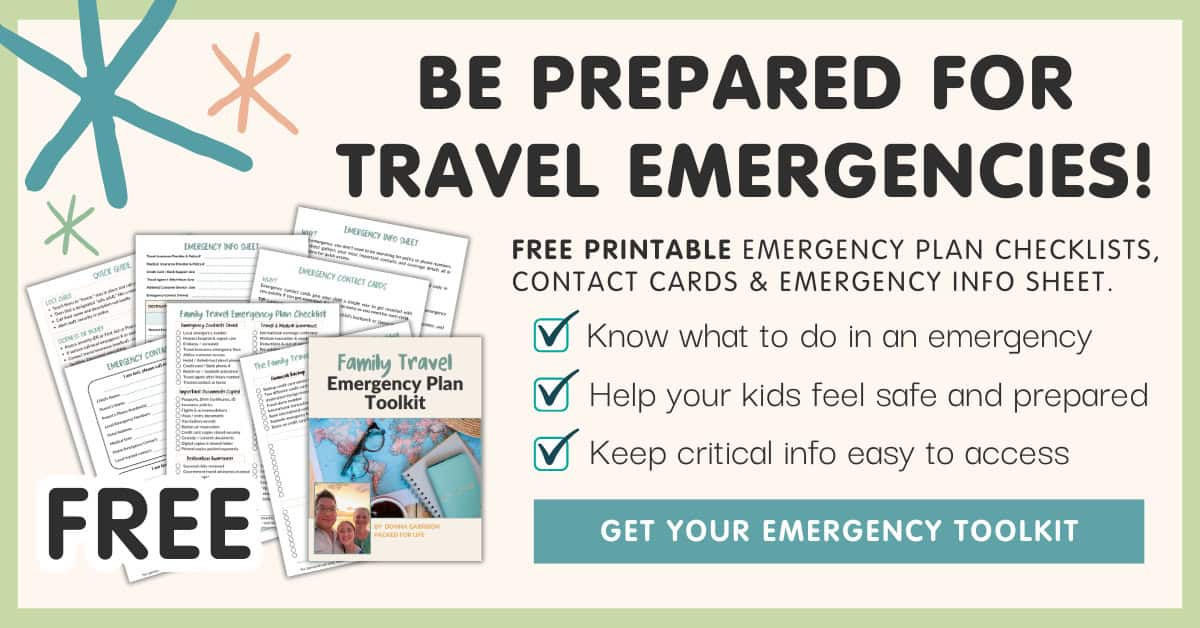
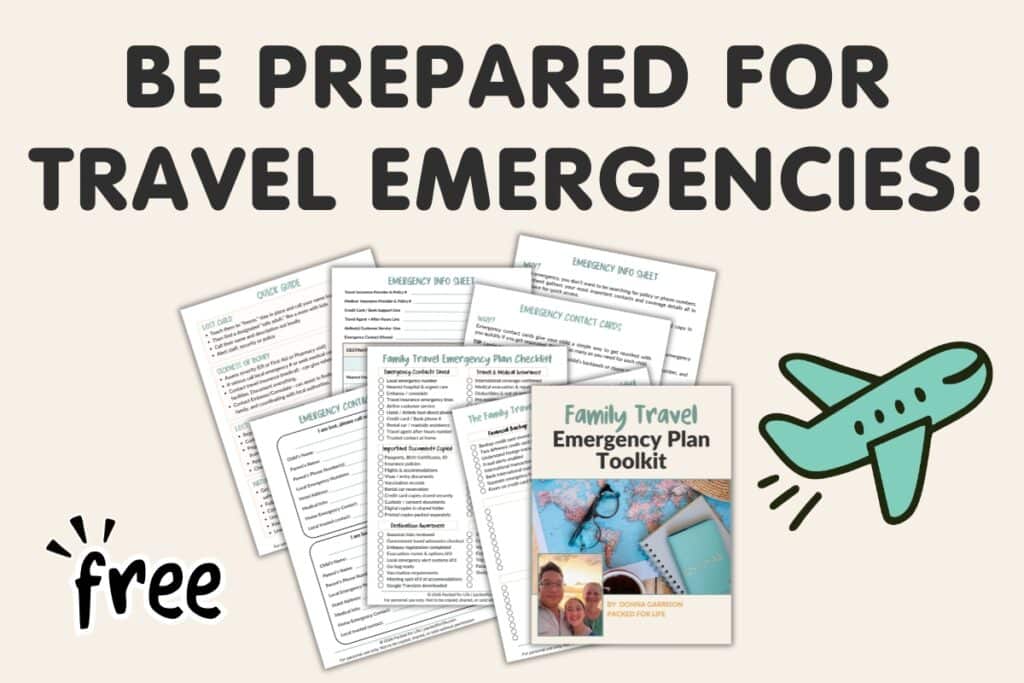
This emergency travel checklist for families (+ FREE printable toolkit) will walk you step by step through how to organize contacts, create separation plans, secure important documents, and review travel insurance. As well as prepare for disruptions like natural disasters or flight cancellations, so your family feels calm and well prepared long before the unexpected happens.
The Complete Family Travel Emergency Plan Checklist
Before we dive in, here’s what a complete plan includes:
After that earthquake in Bangkok, we turned this into a written pre-trip checklist that we review before every international flight and most domestic trips.
Now let’s break it down.
Why Your Family Needs a Travel Emergency Plan (Even for “Easy” Trips)

It doesn’t matter if you’re going to a nearby beach town or flying across the world, emergencies don’t check your itinerary first.
On a simple weekend trip to Yellowknife, Canada before we moved up there, my toddler spiked a high fever at 11 p.m. We didn’t know where urgent care was. We didn’t have local emergency numbers saved (they didn’t use 911 at the time), and our accomodation didn’t have hotel staff to ask.
We were running around in a bit of a panic to be honest, even though this happened in our own country, where we spoke the language, and understood the medical system.
That night gave me a bit of a wake up call and taught me that preparedness helps removes panic.
A family travel emergency plan:
- Reduces panic in high-stress moments – When everyone knows the plan, decisions happen faster and easier.
- Keeps kids calmer because you’re calm – Children mirror your reactions. A clear plan helps you stay regulated, which helps them feel safe.
- Speeds up medical response time – Knowing emergency numbers & where the nearest hospital is and having insurance details ready saves critical minutes.
- Prevents small problems from becoming big ones – A minor illness, lost passport, or delayed flight becomes manageable when you’ve already thought through the steps.
- Helps you navigate natural disasters or severe weather safely – Knowing evacuation routes and local emergency systems reduces guesswork.
- Builds confidence for parents – You can enjoy your trip more fully when you’re not quietly worrying about “what if.”
It’s not about expecting disaster. It’s about being ready for anything.
1. Emergency Contacts to Save Before You Travel
Most families assume they’ll “figure it out” in the moment. Heck, we were as guilty of this as anyone, because luckily we hadn’t had to deal with too many unexpected negative circumstances….. until they happened.
But when something happens, you don’t want to Google under pressure.
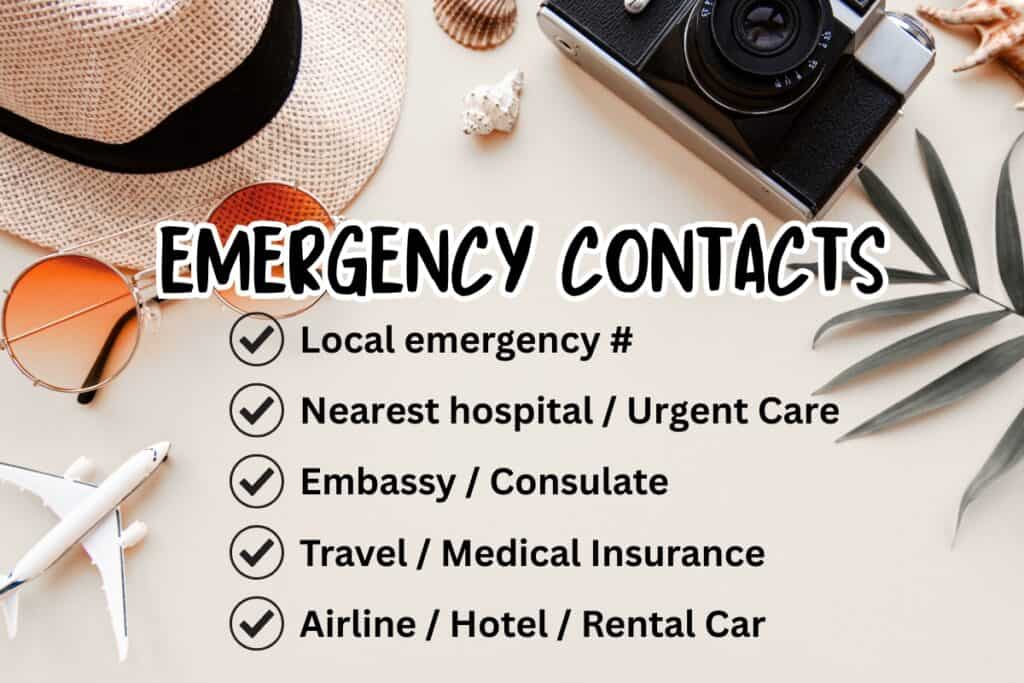
Before every trip, we now save information on:
- The local emergency number (not all countries use 911)
- The nearest hospital and urgent care for each destination we are visiting
- Our country’s embassy or consulate (for international travel)
- The travel insurance emergency line
- Airline customer service numbers
- Hotel or Airbnb host’s direct phone number (not just the booking app)
- Rental car or roadside assistance numbers if we’re driving
- A trusted emergency contact back home
Other info that’s helpful to save as well:
- Your pediatrician’s after-hours line
- Closest hospital with pediatric emergency services
- Your travel agent’s after-hours number
- Local police non-emergency line (especially useful for theft or insurance reports)
- Closest 24-hour or late night pharmacy and its Google Maps location saved offline
- Credit card fraud and bank support lines – it’s usually on the back of your cards as well
When we were in Bangkok during that earthquake, we didn’t know where to tune in for info on the local emergency guidelines, or where to go if we did need to evacuate the city.
Luckily our AirBnB host kept us somewhat up to date on what the government was saying. But not knowing what to do definitely added to our stress in that situation.
⭐️You may also like these helpful travel tips: Secrets to Snagging Cheap Airfare with Google Flights and these easy ways to build a family travel fund or use our Free travel budget calendar to help budget your trip.
2. Travel Medical Insurance Coverage Reviewed & Purchased
Many parents assume their regular insurance, credit card or work medical insurance covers them everywhere for any medical issue.
It often doesn’t.
Here are some things to review and consider:
- Does your policy cover international medical care?
- Is medical evacuation or repatriation included?
- Are pre-existing conditions covered?
- Are pediatric specialists and emergency services covered?
- Will the insurer pay hospitals directly, or will you need to pay upfront and submit a claim later?
- What are your deductibles and out-of-network costs abroad?
- Does coverage include ambulance transport within the country?
- Are trip interruption or emergency return-home expenses included?
- Are high-risk activities excluded from coverage?
- Does your credit card offer any travel protection? If so what exactly and for how long?
- What’s the emergency claims process if something happens abroad?
- Coverage if a parent becomes incapacitated (especially if travelling with only one parent). If a parent is hospitalized, does the policy cover a companion ticket home for children? Does it cover a relative flying in to assist?
- Are translation & medical assistance services included? Things like medical translation support, 24/7 nurse hotline, help locating English-speaking doctors.
We also check whether our policy covers prescription replacement, and emergency dental care.
When we were preparing for our 6 month Southeast Asia trip we had to shop around for a plan that covered our full 6 months, included repatriation costs, and provided enough emergency medical coverage for us to be comfortable travelling in 3 different countries.
Insurance policies vary widely by provider and country, so it’s important confirm coverage details directly with your insurer before you travel. This isn’t legal or insurance advice, however it is what we personally do before every trip.
3. Important Travel Documents to Copy and Store
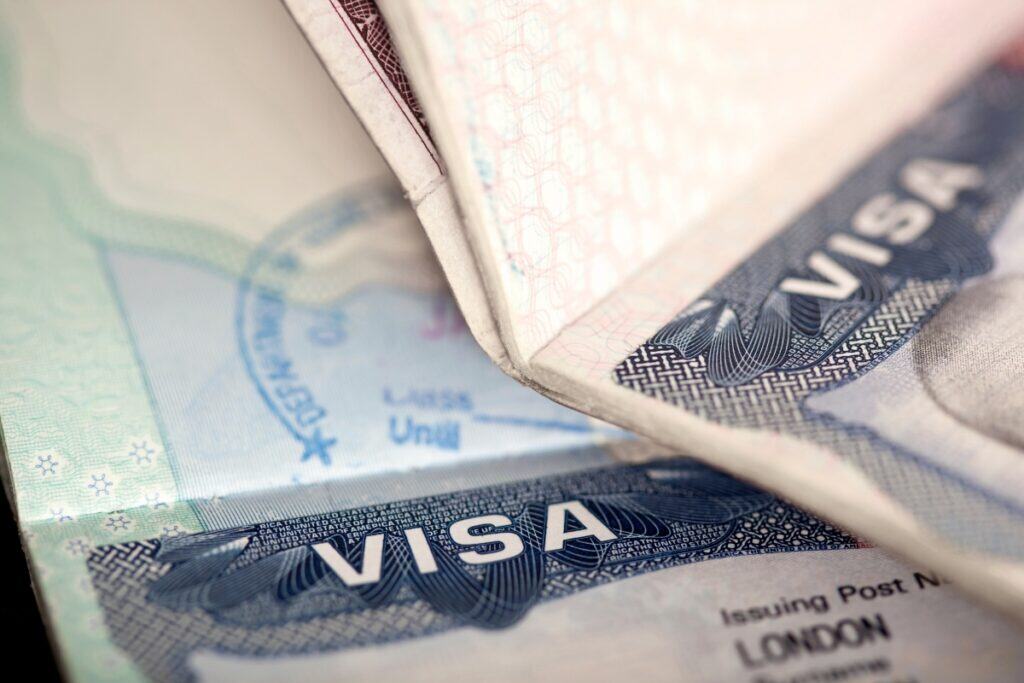
Lost passports, stolen wallets, missing luggage, these things happen and when they do, access to documentation makes the difference between a stressful inconvenience and a full-blown crisis.
Before every trip, copy and securely store:
- Passports (photo page and signature page)
- Driver’s licenses or government-issued ID
- Birth certificates (especially if one parent is traveling alone with children)
- Travel insurance policy and emergency contact details
- Vaccination records or required entry health documentation
- Flight confirmations and ticket numbers
- Hotel or accommodation confirmations
- Rental car reservations
- Visa approvals or entry permits (if required)
- Credit card customer service and fraud hotline numbers
- Copies of both sides of credit cards (stored securely, not printed loosely)
- Custody agreements or notarized consent letters (if applicable)
Digital and Physical Backup Strategy
We use a two-layer system.
First, we keep printed copies of essential documents in separate bags, not all in the same suitcase. If one bag goes missing, we still have access.
Second, we store digital copies in a google drive folder shared between both parents. We also sometimes take screen shots & save them in our notes app (you can add a PIN for security) for offline access in case WiFi or cell service is unavailable.
If your phone dies, paper saves you.
If your bag disappears, digital saves you.
I like knowing I can easily access these documents and info when I need them.
4. Create a Family Separation Plan While Traveling

Crowded airports. Theme parks. Train stations. Malls
It only takes seconds to get separated.
I learned this at a night market when I looked away for just a moment and our daughter vanished into a sea of people.
It lasted probably less than two minutes. But it felt like an hour, the kind where your stomach drops and your brain starts racing through worst-case scenarios, wondering how we would find each other again in the crowd.
Ever since we’ve prepare our kids before every trip.
We teach them:
- Stay where you are if you realize you’re lost, or if they’re old enough to navigate their way around, set up a meeting point.
- Look for a uniformed employee or a parent with children
- Know mom and dad’s full names and phone numbers (if old enough)
- Carry a small emergency contact card (keep it in their back pack, or on their person)
If your kids are super young, you can also write your phone number on their arm just in case.
This isn’t about scaring them. It’s about empowering them to know what to do if this happens.
What to include on the emergency contact card
Each kid should carry a small card in a secure pocket or backpack. It’s simple, clear, and easy for an adult to understand quickly. If you laminate it, the card will last better.
Include:
- Child’s full name
- Parent or guardian full names
- Primary & secondary phone numbers (cell # preferred, + include country code for international travel (for example, +1 for U.S./Canada)
- Hotel / AirBnB name, address & phone # – Copy the address exactly as written in your booking.
- Emergency contact back home or local trusted contact if you have a friend, family member, or host in-country. List their name and phone number.
- Any critical medical information (severe allergies, medical conditions etc.)
- Language note if traveling abroad (for example: “Parents speak English”)
- Write: “I’m lost, please contact parents” in English and the local language (use google translate to help you).
5. Build a Travel Emergency Kit for Your Family
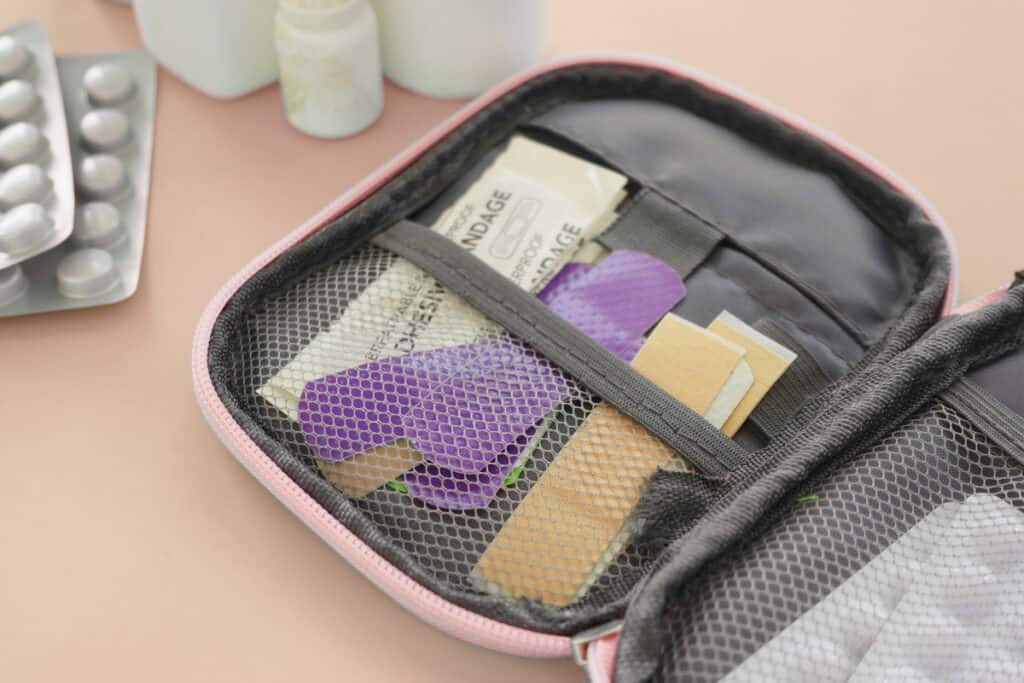
You don’t need a survival bunker, but a few smart essentials are helpful, especially if you are travelling places where there’s easy access to a pharmacy & supplies.
When we visited Cuba however, I brought everything in a small first aid kit I thought we’d need, as some things were known to be difficult to impossible to find there.
We usually pack:
Medical Items
- Fever & pain meds (kids and adults)
- Prescription medications (packed in original containers with an extra 3-7 days’ supply) + the prescriptions
- Thermometer
- Bandages and antiseptic wipes
- Allergy medication
- Motion sickness medication
- Any critical medical devices (inhalers, EpiPens, etc.)
Practical Items
- Portable phone charger or power bank
- Flashlight (small and lightweight)
- Printed emergency contacts sheet
- Emergency cash
- Refillable water bottle
- Basic snacks for delays
- 24-hour essentials in carry-on (underwear, change of clothes, toiletries) + prescription meds
There have been multiple times our flights have been delayed, meaning our checked bags were inaccessible overnight. Having medications, snacks, chargers, tooth brushes and a change of clothes in our carry-on made those long waits easier.
6. Preparing for Natural Disasters and Evacuations
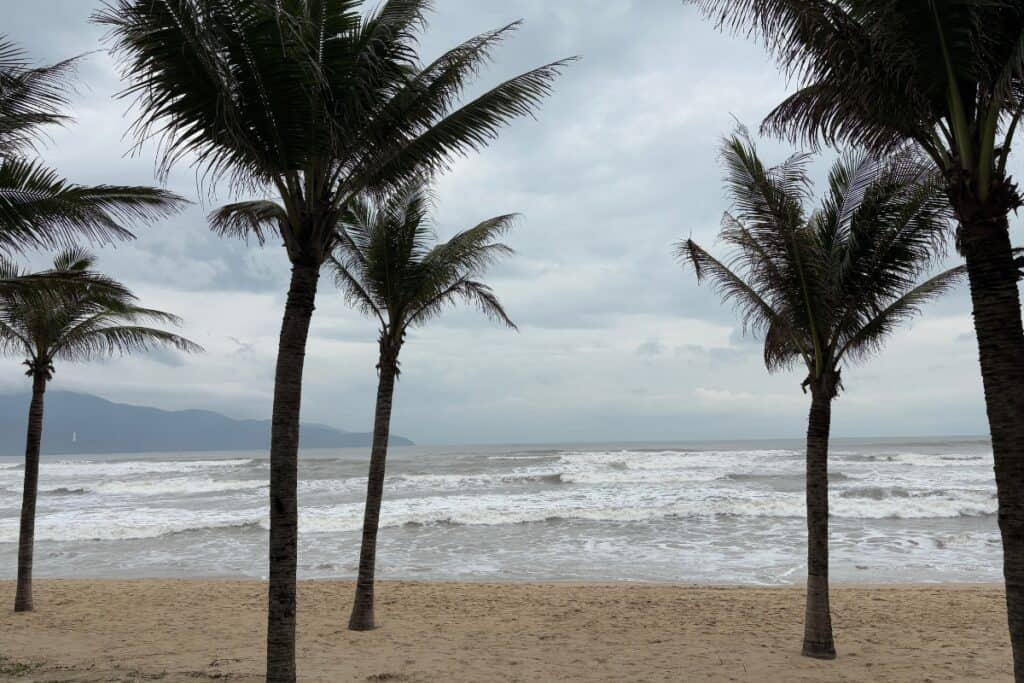
Different destinations carry different risks.
Preparing in advance doesn’t mean expecting something bad to happen. It means understanding the environment you’re entering so you can make informed decisions and are aware of any potentially serious issues.
Before booking our Southeast Asia trip, I was frequently on Canada’s travel advisory site reviewing entry requirements, health guidance, and regional advisories for the specific areas and countries we planned to visit.
This research definitely impacted our routes and timing. Both with visiting Thailand to avoid the smoky season, and Vietnam to avoid the central flood-prone areas during their rainiest season.
Before you travel, check:
- Hurricane season timelines
- Wildfire alerts and air quality risks
- Monsoon season or flood risks
- Earthquake zones
- Extreme heat advisories
- Travel advisories for the country, cities, and regions you plan to visit
Here are examples of official government travel advisory sites:
- USA – travel.state.gov
- Canada – travel.gc.ca
- Australia – smartraveller.gov.au
- UK – FCDO Travel Advice – GOV.UK
We check our government’s official travel advisory site before booking, again about two weeks before departure, and once more in the final week before travel to make sure nothing has changed.
For international trips, we also register with our Registration of Canadians Abroad program. So we can receive safety alerts while abroad and get notified in case there’s an emergency at our destination.
The service also enables you to receive important information before or during a natural disaster or civil unrest. Most countries have an option like this.
What to Do With This Information
Checking advisories is only the first step. You also need a simple action plan.
Ask yourself:
- Does this destination often require evacuations, therefore a plan during certain seasons?
- Is your accommodation in a flood zone or high-risk wildfire area?
- Are there local emergency alert systems we should register for or be aware of?
- Does our travel insurance cover evacuation due to natural disasters or political unrest? Many don’t.
- Would we recognize an official evacuation order if it were issued in another language?
For hurricane prone areas, we confirm evacuation routes and identify the nearest emergency shelter location before arrival.
For wildfire or monsoon regions, we monitor local news and air quality apps during the trip.
For earthquake zones, we now review basic building safety guidance and identify safe meeting points outside our accommodation.
I also now keep a “go-bag” of sorts where I have all our important info, passports, emergency cash, and a change of clothes in once place, that I can easily grab in case we have to leave our hotel or city fast.
These are small steps, but they help remove some of the guesswork in a stressful moment.
Accommodation Safety Matters Too
When booking lodging, consider:
- Is the building in a known flood-prone area?
- Does it have multiple exits?
- The number of floors & how easy it would be to evacuate the building?
- Is it in a remote area with limited evacuation access?
- Is the host communicative, and able to provide emergency instructions?
After the Bangkok earthquake especially, we now briefly review emergency exits when we arrive, just like you would on an airplane. Plus we have a meeting spot worked out that everyone is aware of.
It takes less than a minute, and it changes how prepared you feel.
What to Do If an Evacuation Is Ordered
Evacuations are rare, but when they happen, it’s important to have an idea of what to do.
If local authorities issue an evacuation order:
- Follow Official Instructions Only – Rely on local emergency alerts, government advisory sites, embassy updates, and verified news sources. Also make sure you have the language where your visiting downloaded on Google Translate so you don’t need WIFI to use it.
- Know What to Grab First – have a go-bag ready with passports and IDs, travel insurance info, essential medications, emergency contact list, phone chargers and power bank, basic clothing for 24–48 hours.
- Have a Pre-Discussed Meeting Plan – if your family becomes separated identify a nearby secondary meeting point, have a backup contact at home who everyone knows to check in with. After the Bangkok earthquake, we now briefly identify a safe outdoor meeting spot whenever we check into new accommodations.
- Understand Transportation Options – Is the airport operating? Are roads open? Do we need rental car access? Are public evacuation routes designated?
In some disasters, evacuation happens locally (to safer accommodation). In others, it requires leaving the region entirely.
Your insurance policy may cover evacuation transport, but only under certain conditions. This is why reviewing your coverage beforehand matters.
7. What to Do During Flight Cancellations or Border Closures
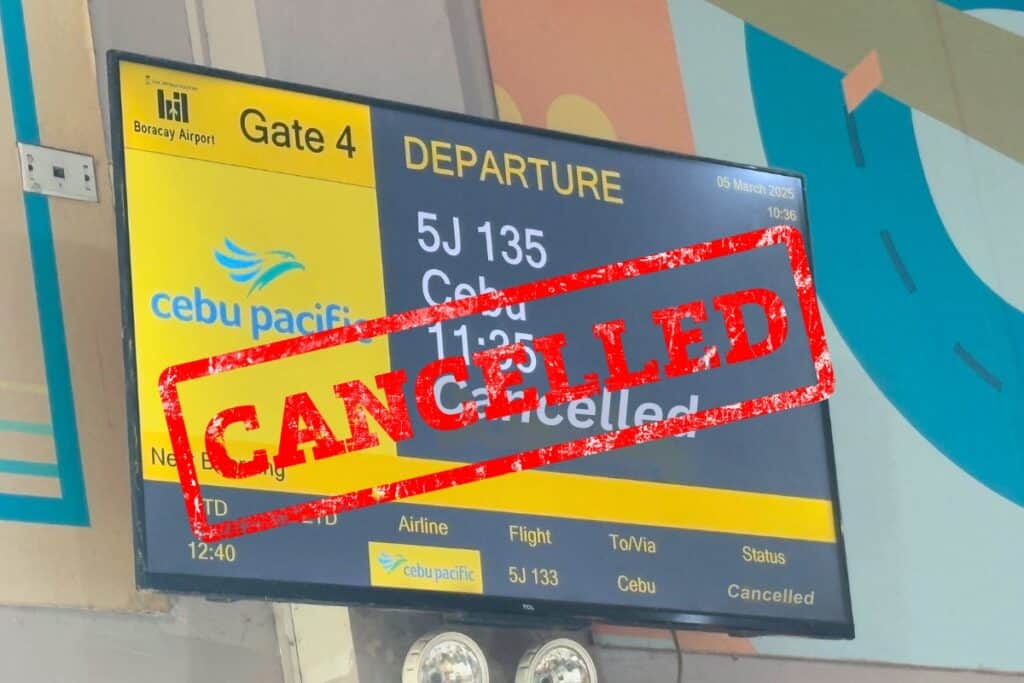
Travel disruptions can range from inconvenient to overwhelming.
A short delay is usually manageable (minus the over tired kid tantrums), but a multi-day cancellation or sudden border closure require a bit more thought.
The world changes quickly. Having a flexible plan protects your family from getting stranded without options.
Your emergency plan should include:
- Packing 24-hour essentials in your carry-on or a go-bag
- Keeping emergency funds accessible
- Having a backup accommodation plan
- Monitoring travel advisories regularly
- Shelter-in-place plan
- Tracking visa expiration dates
- Saving embassy contact information
- Trip interruption (after you’ve departed) and trip cancellation (before you’ve left) travel insurance
Act Quickly But Calmly
Airline seats rebook fast. As soon as you receive a cancellation notice:
- Check the airline app immediately
- Call customer service while simultaneously searching alternative routes
- Look at nearby airports, not just your original one
- Ask your family or friends at home to book flights for you if they’re able to and you aren’t
- Consider other forms of transportation to get to a nearby country that may be safer, and have more flight options to your final destination
Understand Your Rights
Depending on your departure country, you may be entitled to:
- Meal vouchers
- Hotel accommodations
- Compensation
- Free rebooking
Research passenger rights in advance for the regions you’re flying through (for example, EU regulations differ from North American policies).
Secure Accommodation Early
If a cancellation turns into an overnight stay:
- Book lodging immediately before inventory fills
- Check refundable options
- Keep receipts for potential insurance claims
When delays ripple across airports, nearby hotels fill quickly.
Keep Kids Regulated
Children don’t need to know every detail, they usually need reassurance.
A calm parent and simple framing, especially for young kids helps:
“Our flight changed, so we’re staying one more night.”
“We’re adjusting the plan.”
Make sure they have access to comfort items like their favorite stuffy or blanket.
Stay Financially Flexible
Border closures and cancellations often require:
- Rebooking flights
- Extending accommodations
- Covering meals
- Changing transportation
This is where your financial backup plan becomes critical. More on this next.
8. Create a Financial Backup Plan for Travel Emergencies
This is the part most families overlook.
It’s never a good idea to travel with just enough money and no contingency plan or available credit for unexpected expenses. Emergencies don’t just cost time, they often cost money.
Unexpected expenses may include:
- Upfront medical costs before insurance reimbursement
- Insurance deductibles
- Last-minute flights home or new flights completely
- Extended hotel stays due to cancellations
- Transportation during evacuations
- Replacing stolen items
- Emergency childcare support if a parent is hospitalized
The key isn’t carrying large amounts of cash. It’s building redundancy.
Before traveling, we make sure we have:
- A backup credit card stored separately from the primary card
- Access to emergency cash (not just funds in an account, but cash on hand)
- Fraud alerts enabled
- International transactions approved if required
- Separate emergency funds that are not tied to daily travel spending
- Extra room on our credit card or one specific card for emergencies
One detail many families miss: available credit matters just as much as available cash. If your card is near its limit, you may not have room for a large unexpected charge, even temporarily.
There’s been a few times one of our cards were frozen for hours, until we could sort it out with the bank back home. Luckily we always had a back up so were able to manage until that happened.
It’s also wise to:
- Carry two different card networks when possible (for example, Visa and Mastercard)
- Know your bank’s international customer service number
- Understand foreign transaction fees
- Keep one payment method in a separate bag in case of theft
Financial stress can escalate minor disruptions into major crises. Having multiple ways to access funds creates flexibility and that keeps situations more manageable.
9. How to Prepare Kids for Travel Emergencies
Kids don’t need worst-case scenarios. They need to know what to do in certain situations while keeping it short, calm and age-appropriate.
Before each trip, we have a five-minute “travel safety chat.” We frame it simply:
“Sometimes things don’t go as planned. Here’s what we’ll do.”
We assign simple roles for example:
- One parent grabs documents & go-bag(s)
- One parent gathers the kid(s)
- Kids stay close and listen
For children, we add:
- Who to approach if separated
- Where our meeting point will be
- How to use their emergency contact card
When that earthquake hit in Bangkok, we froze because we hadn’t rehearsed what to do in these types of situations.
Now we know better what to do.
Practice Without Pressure
Sometimes we casually review our plan while walking through an airport, or mall or wherever we are hanging out for the day:
“If we got separated here, what would you do?”
These small repetitions build confidence for you and for them.
10. Where to Store and Access Your Emergency Plan While Traveling
Your emergency plan shouldn’t live in one place.
We keep:
- A shared folder in Google Drive
- A printed summary in our luggage
- Key contacts saved in both parents’ phones
- Offline access to maps with key points saved (hospitals, hotels, embassy / consulates, airports etc.)
Both adults need access to this info. If one phone dies or one bag disappears, the system still works.
Preparedness is about layers, not perfection. You can update anything as needed to suit your family better.
Travel With a Family Safety Plan, Not Just a Packing List
I don’t share this to make travel feel scary.
I share it because I’ve stood outside an Airbnb with my family after an earthquake, wishing I had thought things through just a little more.
You don’t need to prepare for every possible disaster. You just need a simple plan.
Save the contacts.
Copy the documents.
Pack the small emergency pouch.
Have the five-minute chat with your kids.
That’s it.
Because when something unexpected happens and eventually something will you won’t be scrambling. You’ll already know what to do.
And that will help you feel more confident travelling with your family.
Build your plan once. Tweak it before each trip. Then go enjoy your family’s adventures.